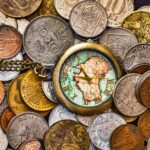

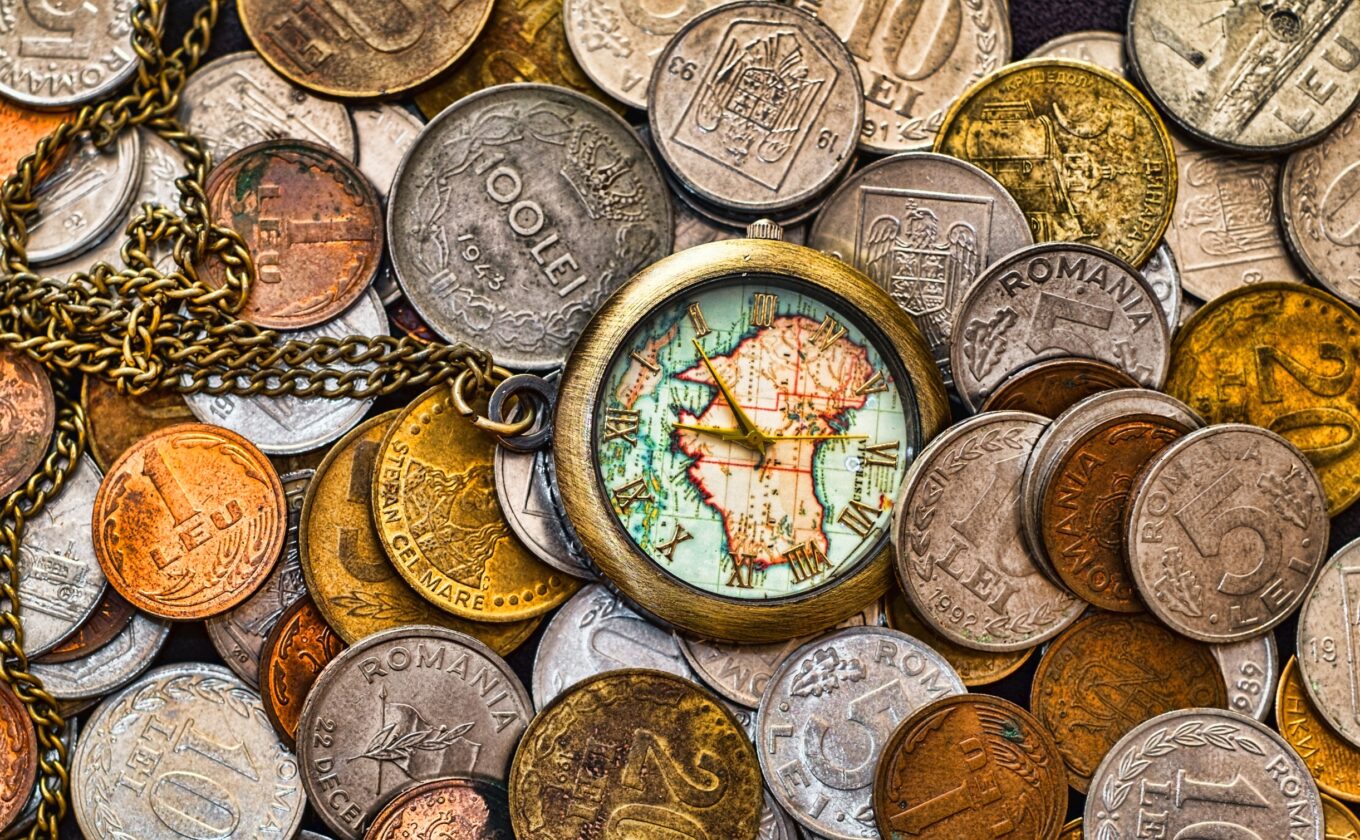
The Heritage session of Coin display and discussion of Gaekwad era coins at Honest Jewellers on Monday morning was a revelation of the range of coins and the deep interest and knowledge of Zubair Motiwala, who owns the collection and the shop that was the venue for the event.
Studying coins is more than just looking at the metallic bits of economic exchange. It tells you so much about the history, politics, language, and economic condition of the era to which they belong. At first, there seemed to be coins just randomly laid out on a tray, of various sizes, designs and weights. But then the more precious collection was brought out, neatly labelled and carefully packed in transparent pouches. As Mr. Motiwala explained, the Gaekwad era coins could be identified by the initials of the ruling king, Sa Ga inscribed in Farsi, indicating Sayajirao II and Ga Ga Ganpatrao Gaekwad or KH Ga, Khanderao Gaekwad. On the flip side of the coin was the mark of the ruler in Delhi.
 The script on the coins also is indicative of the history of language, as the coinages had Farsi, Devnagari and then English to indicate the value of the coins. Only a few of the princely states had their own coins minted and Baroda was among those, with 5 different mints in the state. To a discerning collector, each coin can also be identified by the mint mark where it was manufactured/minted. For example, a coin of half a rupee with the Gaekwad mark on one side and Shah Alam on the other, had the sign of the elephant goad on top, the ankush, identifying the Ahmedabad mint. Farsi was the common connecting language during the Mughal era (as obvious by a popular adage in Hindi. Haath kangan ko aarsi kya, Padhe likhe ko farsi kya? (You don’t need a mirror to see a bracelet on the arm, you don’t have to ask an educated person of he knows Farsi) It is interesting that the transition of the scripts is gradual, with the Persian script being pushed to the side as the Devanagari MA GA takes centre stage in the coins of Malhar Rao. The coins of Sayaji Rao II have Muhammad Akbar’s name on the other side. The one-rupee coin of Sayajirao III has his side profile bust and the value and date 1955 in Devanagari.
 The coin collection has coins made of copper, silver, gold. Though copper is obviously the cheaper metal and used for coins of lower denomination, Zubair pointed out that the availability of a large number of small coins indicated the health of the local economy, the smaller coins there were in circulation, the better off the common people were in that area and era, a simple but insightful observation.
The older coins were hand-made, bulky, unequal, with rough edges, but with an old-world charm and appeal. The later ones are more familiar with the clear machine made, edges and uniform appearance, looking like coins we use now. The etching of the profile of the ruler, was an influence of the colonial coins, which had Queen Victoria’s face.
In the age that the use of cash coins and notes is fast disappearing, the event on heritage coins becomes all the more relevant. Most of us have small hoards of coins from our younger days and some foreign coins given by a well-travelled relative, but to see a collection that has been carefully preserved, labelled and documented is a treat indeed. Do people cultivate hobbies anymore, I wonder!
I have a whole bundle of coins from a few decades ago, when, while working from home, I kept a bowl of small change near the door, for the two girls who worked with me, to use for their bus fare. The bowl somehow got put away among other things and when I discovered it thirty years later, it was of no use, because, unlike the gold, silver copper coins of yore, these were five and ten paise of aluminum. Some day they will emerge again, less valuable than before!
by Margie Sastry