
Introduction to Stepwells – with a brief insight to Vadodara
- 8 years Ago
- 0 Comment
- 3 Min Read
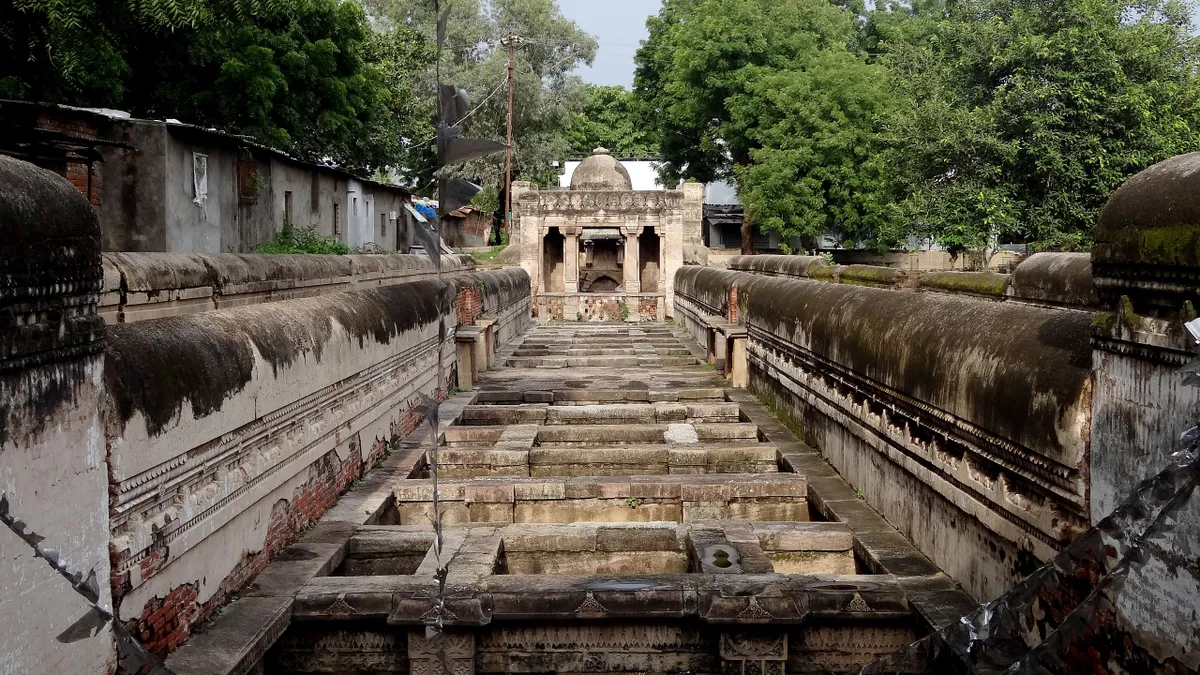
Stepwells are wells or ponds in which water is reached by descending a set of steps. They may be multi-storied, with the use of a water wheel to raise the well water to the first or second floor. They are most common in Western India and are also found in the more arid regions of the Indian subcontinent, extending into Pakistan. The construction of stepwells is mainly utilitarian, though they may include embellishments of architectural significance, and could also be used as temple tanks or as part of a temple complex.
Stepwells are examples of the many types of water storage facilities that were developed in India, mainly to cope with seasonal fluctuations in water availability. A basic difference between stepwells and general-purpose wells is that stepwells make it easier for people to reach the groundwater and to maintain and manage the well.
The builders dug deep trenches into the earth for dependable, year-round groundwater. They lined the walls of these trenches with blocks of stone, without mortar, and created stairs leading down to the water. The majority of surviving stepwells originally served a leisure purpose as well as providing water. This was because the base of the well provided relief from daytime heat, especially if the well was covered.
Stepwells also served as places for social gatherings and religious ceremonies. Usually, women were more associated with these wells because they were the ones who collected the water. They also prayed and offered gifts to the goddess of the well for her blessings. This led to the building of some significant ornamental and architectural features, often associated with dwellings and urban areas. It also ensured their survival as monuments.
Stepwells usually consist of two parts: a vertical shaft from which water is drawn and the surrounding inclined subterranean passageways, chambers, and steps that provide access to the well. The galleries and chambers surrounding these wells were often carved profusely with elaborate detail and became cool, quiet retreats during the hot summers. Many are very simple structures with stairways leading to the well to help fetch water.
Most stepwells found in and around Vadodara are believed to have been built by the trading community of that era, and hence, such wells also marked the possible trade routes of those times. The notable stepwells of Baroda are the Navlakhi Vaav, located inside the Lukshmi Vilas Palace premises, and the Vidhyadhar Vaav, located at Sevasi. However, the sad fact is that many lesser-known but documented stepwells in Baroda and its neighborhood lie in a state of utter neglect. These need to be restored and preserved, as they are living links to our historical connection to water conservation and the flourishing of Baroda as a city today.
Sameer Gaekwad
- 5 years Ago
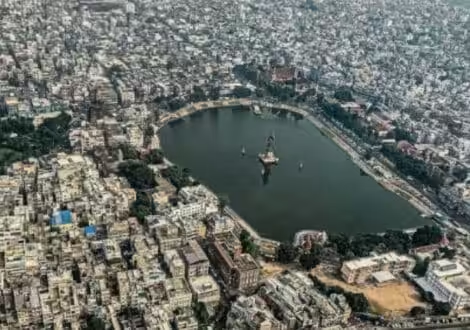
When we at Heritage Trust first planned doing Walks in and around Baroda, our attention, rather obviously, focused on the Walled City. We were not...
- 6 years Ago
(Disclaimer- Taking the conversation to an academia-oriented outlook, the column is an excerpt from the author’s work looking at cultural geographies and the role of...
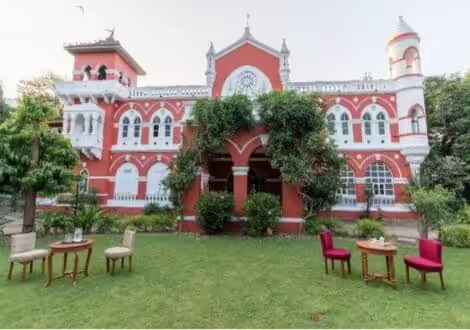
Madhav Bagh, a heritage residence in the city of Vadodara, has an interesting story to tell. Located in the centre of the city, opposite ONGC...